

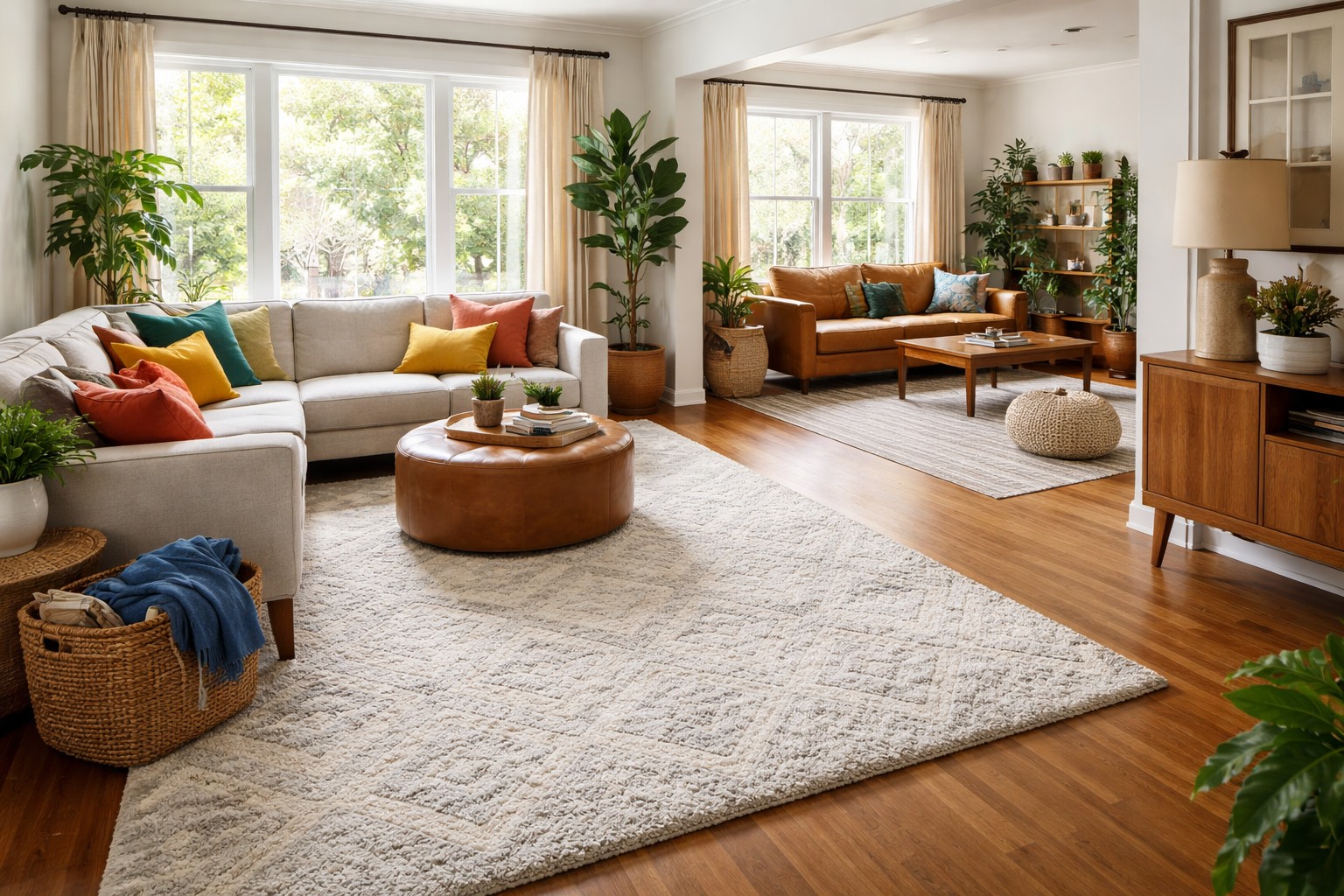
Busy Atlanta households ask a lot from an area rug. It has to look good, feel right underfoot, and still hold up through constant movement—kids running in from the backyard, friends dropping by, pets doing laps, and everyday life happening in every room. The biggest “feel vs function” decision usually comes down to flatweave vs plush area rugs. Both can look amazing, but they behave very differently once real traffic starts.
The big difference comes down to structure
Flatweave rugs are built with a low, tightly woven construction and little to no pile. Plush rugs are the opposite—higher pile, softer feel, and more cushion. That structural difference changes everything: how dirt sits, how fast the rug shows wear, how easy it is to clean, and even how it sounds in a space.
For households that want rugs to stay sharp-looking with minimal fuss, flatweave tends to be the practical favorite. For households that want comfort and softness first—especially in more relaxed rooms—plush often wins.
Where flatweave rugs shine in active homes
Easier day-to-day cleanup
Flatweave rugs don’t trap debris as deeply because there isn’t much pile for particles to sink into. That means crumbs, grit, and pet hair typically sit closer to the surface, making regular vacuuming quicker and more effective. Spot cleaning is usually simpler too, because spills don’t immediately disappear into thick fibers.
This is why many high-traffic rooms—living rooms, dining spaces, and hallways—pair well with flatweaves. In open-concept layouts common around Atlanta, a flatweave can define zones without becoming a maintenance headache.
Better behavior under furniture and doors
Flatweaves tend to stay flatter. Dining chairs slide more easily. Doors catch less. In rooms where furniture moves a lot (or where kids love shifting floor cushions and ottomans), that low profile feels “easy” in everyday use.
When shopping for area rugs that can handle constant foot traffic, flatweave is often the style that keeps its shape and look with fewer surprises.
A smart choice for homes with pets
Flatweave rugs can be friendlier for pet households because fur doesn’t bury itself as deeply. Accidents and muddy paw prints are still annoying, but the low construction can make cleanup less stressful. With the right pad underneath, a flatweave can also reduce sliding and help the rug stay anchored in busy pathways.
Where plush rugs win (and what to watch for)
Comfort that changes how a room feels
Plush rugs add softness and warmth instantly. Bedrooms, nurseries, and cozy family rooms benefit from that cushioned feel, especially in the morning or after a long day. Plush also helps dampen sound—useful in multi-level homes where footsteps can echo.
If a space is meant to feel relaxed, plush can be the difference between “nice” and “sink-in comfortable.”
Traffic lanes show up faster
Plush rugs can show wear patterns more quickly in high-traffic rooms. Footpaths compress fibers over time, and that compression can create shading or matting—especially in the routes everyone naturally takes from sofa to kitchen, hallway to stairs, or entry to living room.
This doesn’t mean plush is a bad choice. It just means placement matters. Plush works best where comfort matters most and traffic is more controlled.
Maintenance needs are higher
Plush rugs typically require more consistent vacuuming and occasional deeper cleaning because dust and debris settle into the pile. In a busy household, that maintenance expectation should match real routines. If the goal is “looks perfect with minimal upkeep,” plush may frustrate. If the goal is “comfort first,” the extra upkeep often feels worth it.
Picking the right rug based on the way each room gets used
High-traffic zones: function-first usually wins
For living rooms, dining rooms, hallways, and spaces where shoes are more likely to appear, flatweave tends to perform better long-term. It resists the “worn path” look, handles frequent cleaning, and stays visually crisp even when life gets hectic.
Comfort zones: plush makes more sense
Bedrooms, reading corners, upstairs lounges, and spaces designed for downtime often benefit from plush. Those rooms are typically easier to protect from heavy grit and constant movement, which helps plush stay nicer longer.
Custom sizing solves a lot of Atlanta layout issues
Atlanta homes vary a lot—townhomes with narrow rooms, older homes with formal living areas, modern open concepts, and everything in between. A rug that’s “almost” the right size can make a space feel off, especially under sectionals or dining tables.
For rooms where the perfect fit matters, custom area rugs can make it easier to balance comfort, durability, and a size that actually works for the furniture layout.
A practical takeaway that holds up
Flatweave usually wins for durability and lower-effort maintenance. Plush usually wins for softness and comfort. Many busy Atlanta households end up mixing both: flatweave in the “action” rooms and plush in the “recharge” rooms. That approach keeps the home comfortable without turning rug care into a constant project.
For help comparing flatweave and plush options in person, scheduling a measurement, or planning a custom fit, get started by reaching out through our contact page and our flooring experts will help narrow down the best match for a busy Atlanta home.


