

If you have lived in Sandy Springs or anywhere in Metro Atlanta for more than one full year, you already know what spring and summer feel like. The air gets thick before June even arrives. Pollen coats everything in a yellow-green film for weeks on end. Then the humidity settles in and stays, sometimes all the way through September. It is beautiful country, but it is not easy on your floors.
Most homeowners think about seasonal floor care in terms of winter damage, snow, salt, and cold drafts. But in Atlanta, summer is where the real story is. Humidity, pollen, and heat create a combination of conditions that quietly wear on every type of flooring in your home if you are not paying attention. Here is what is actually happening, room by room, and what to do about it.
What Georgia humidity does to your hardwood
Wood is a living material in the sense that it never stops responding to its environment. When the air is humid, wood absorbs moisture and expands. When the air dries out, it releases that moisture and contracts. In most parts of the country, this cycle is dramatic in winter. In Atlanta, it happens in summer too, because the humidity swings between a muggy 80 percent outside and whatever your air conditioning is doing inside.
The result, in a home with real hardwood flooring, is a floor that is constantly trying to find equilibrium. You may notice boards cupping slightly, which is when the edges of a plank sit higher than the center, or gapping between boards when the AC runs heavily and the indoor air dries out fast. Neither of these is an immediate emergency, but both are signals that your home's humidity needs attention.
The fix is simpler than most people expect. A whole-home humidifier or dehumidifier, depending on the season, keeps your indoor relative humidity between 35 and 55 percent year-round. That steady range gives your hardwood a stable environment to live in, and it dramatically reduces the seasonal movement that causes cupping, gapping, and eventual finish damage.
Pollen season: the sandpaper you never invited in
Atlanta pollen season is not a joke. The city regularly ranks among the worst in the country for seasonal pollen counts, and that fine yellow dust gets into everything, including your floors, even with windows closed.
Here is the problem with pollen and hard surface floors: it behaves like a very fine abrasive. When it settles on hardwood, luxury vinyl, or laminate and gets walked across, it micro-scratches the finish over time. You will not notice it happening day to day, but over a full spring season it adds up.
The solution during peak pollen months, typically March through May in the Atlanta area, is to vacuum or dry-mop hard floors more frequently than you normally would. Skip the wet mop during this period unless necessary, as dragging a damp mop through pollen can smear it into the finish rather than removing it. Use a vacuum with a hard floor setting and a microfiber dry mop for daily maintenance, and you will stay well ahead of the damage.
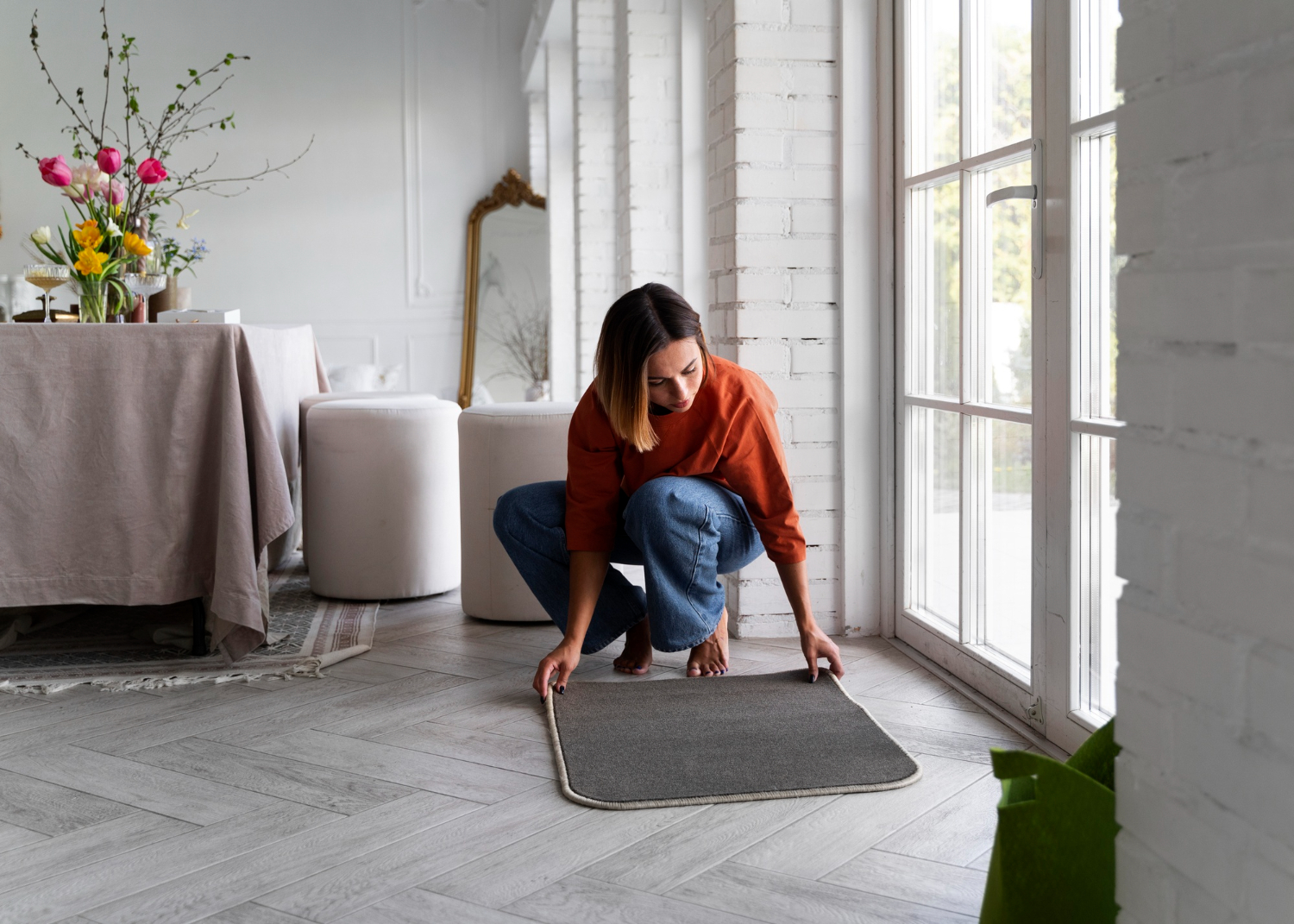
Entry points are where the real battle happens. Thick, absorbent doormats at every exterior door, inside and out, catch the bulk of what people track in before it reaches your floors. During pollen season, shake or replace those mats every few days.
Carpet and pollen: a different kind of challenge
Carpet handles pollen differently than hard surfaces, and the conversation is more nuanced than people think. On one hand, carpet traps pollen below the surface where it cannot be walked across and redistributed as easily. On the other hand, that trapped pollen stays in the fibers until you extract it, which means a carpet that is not vacuumed frequently during spring becomes a reservoir.
If you have carpet in your Atlanta home, vacuum at least twice a week during pollen season with a HEPA-filter vacuum, which captures fine particles rather than recirculating them back into the air. A professional deep clean at the end of spring, once pollen counts drop, is one of the best investments you can make for both your floor and your indoor air quality.
Rooms that take the most punishment in summer
Not all spaces in your home face the same conditions. Here is where to focus your attention.
Entryways and mudrooms take the first hit from everything coming in off the street, pollen, humidity, and tracked-in moisture from afternoon thunderstorms. Hard, easy-to-clean surfaces work best here. Luxury vinyl is a particularly strong choice for these spaces because it handles moisture and heavy foot traffic without complaint, and it cleans up fast.
Living rooms and bedrooms are typically more controlled environments, but humidity can still be an issue in homes where the HVAC does not reach every room evenly. Keep an eye on exterior walls and corners where condensation can form.
Kitchens see constant moisture from cooking and the temperature contrast of a hot stove against a cool AC-controlled room. Wipe up spills promptly, run your range hood during cooking to manage steam, and make sure there is no water sitting under appliances.
Refinishing: the reset button for summer-worn hardwood
If your hardwood floors have taken a few years of Atlanta summers and the finish is starting to show it, scratching, dulling, or slight surface cupping that has since leveled out, refinishing is the most cost-effective way to bring them back. Our professional hardwood refinishing service restores the surface to like-new condition without replacing the floor entirely, which means you keep the character of the original wood and protect it for another decade of Georgia seasons.
Ready to protect your floors before the next season hits? Schedule your free in-home estimate and our flooring experts will help you figure out the best plan for your home.


