

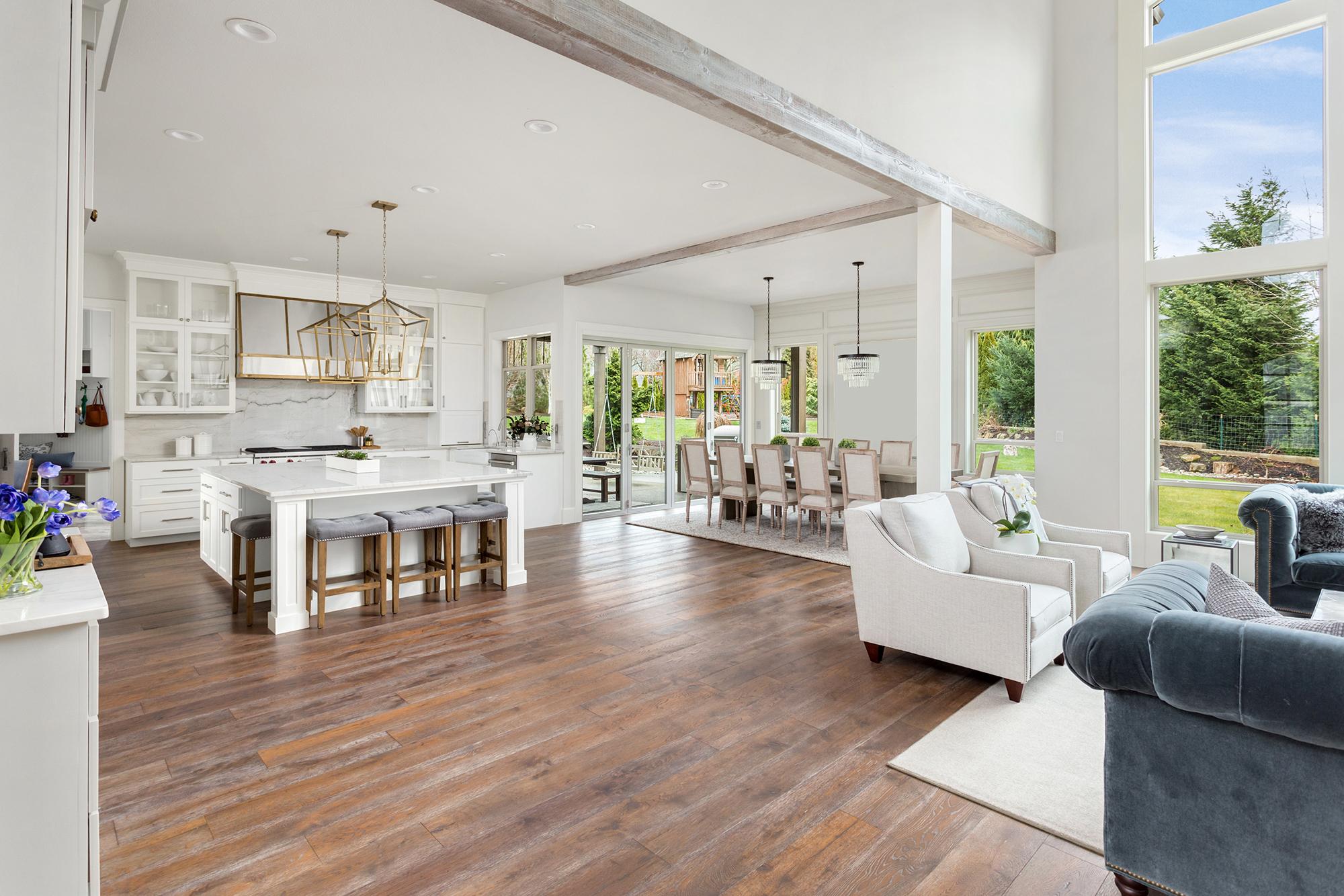
Older ranch homes and multi-story traditional layouts throughout Sandy Springs and Dunwoody often settle over time, leaving wood-framed floor systems with dips, crowns, and high spots. New laminate installed over an uneven surface can lead to hollow sounds and loose plank joints if you rely solely on thick padding to hide those irregularities.
Established neighborhoods across Dunwoody, Sandy Springs, and neighboring East Cobb feature solid, well-built homes, but decades of foot traffic and seasonal humidity leave floor joists slightly out of alignment. Extra-thick underlayment padding might seem like an easy way to smooth out dips across a family room or hallway. Soft foam compresses under foot traffic, but it cannot bridge physical voids or level out bowed wood framing beneath your feet. Long-term performance for a floating floor starts with a flat, rigid subfloor plane, not the thickness of the foam roll beneath the planks.
Subfloor Irregularities and Floating Laminate Performance
Modern laminate planks click together using precision-milled tongue-and-groove locking profiles. These joints hold the floating floor together as a unified surface across your room, moving naturally with seasonal temperature shifts. When the wooden framing underneath contains unaddressed hills or valleys, every step forces the laminate plank to bend over the void. Over months of daily household activity, that continuous vertical deflection puts intense physical pressure on the locking joints.
Joint Fatigue and Plank Separation Over Low Spots
Constant flexing along low spots stresses the precision edges of each plank. Heavy footpaths from family rooms into kitchens push the floating planks downward until the locking edges snap or pull apart, creating visible gaps between boards that trap dirt and moisture. Once a tongue-and-groove joint breaks beneath the surface, the planks can no longer transfer weight to adjacent boards. That localized damage spreads across the walking path, causing adjacent seams to separate and leaving individual plank edges exposed to chipping.
Hollow Echoes and Acoustic Bounce Under Everyday Footsteps
Footsteps passing over a framing dip create an annoying hollow tap or drum effect. Even heavy premium laminate sounds hollow when the planks bounce off the underlayment rather than resting flat against a solid, level surface. That vertical air gap amplifies the impact of pet nails, children running, and hard-soled shoes, turning normal movement into airborne room noise. Without a rigid subfloor directly supporting the plank, sound waves vibrate inside the cavity beneath the floorboards instead of getting absorbed.
Cushion Thickness Limitations Over Uneven Joists
Underlayment serves specific acoustic and thermal functions, but it does not add structural leveling power. Padding that exceeds standard manufacturer thickness ratings actually causes more harm than good beneath floating laminate installations in older Sandy Springs ranches and two-story East Cobb homes.
Soft underlayments compress unevenly under heavy furniture legs, high heels, and running pets:
Locking System Strain: Excess padding creates a spongy trampoline effect that strains the brittle core of your laminate locking joints.
Plank Deflection: Soft foam squishes down into subfloor valleys rather than leveling them, causing planks to bend under everyday walking traffic.
Surface Instability: Thick, soft underlayments allow heavy bookshelves or dining tables to tip slightly out of plumb as the foam crushes under static weight.
Professional installers pair high-density, thin underlayments with thoroughly leveled subfloors, protecting the mechanical integrity of the click-lock system.
Wood-Framed Subfloor Realities in North Metro Atlanta Homes
Homes built from the 1960s through the 1990s across Sandy Springs, Dunwoody, and Roswell sit over vented crawl spaces, walkout basements, or daylight terrace levels. These wooden support systems react naturally to time, weight, and seasonal humidity shifts.
Joist Crown and Foundation Settlement Across Older Floor Systems
Floor joists rarely stay perfectly flat across decades of service. Some timber beams crown upward, while others sag under the weight of heavy interior partition walls, kitchen islands, or master bathroom suites. In neighborhoods near Mount Vernon Highway or along Dunwoody Club Drive, these natural structural shifts create high ridges and low pockets across the plywood or OSB decking that must be corrected before laying new planks. A rigid laminate floor installed over a crowned joist without grinding down the peak will cause the boards to rock like a seesaw whenever someone steps on either side of the ridge.
Subfloor Seam Swelling and Fastener Movement From Seasonal Humidity
Plywood and oriented strand board panels expand and contract as humidity rises and falls throughout humid Georgia summers. Exterior doors, laundry rooms, and basement stair landings often show swollen subfloor seams where moisture penetrated the wood fibers, creating hard ridges that push directly into the back of your new flooring. Original construction nails also loosen within the framing as the timber expands and dries across heating cycles. Those loose fasteners allow the subfloor panels to rub against the joists, creating persistent floor squeaks that new flooring alone cannot silence.
Professional Subfloor Preparation Standards
Durable installations call for strict adherence to industry flatness tolerances established by the National Wood Flooring Association. A professional flooring crew assesses the entire subfloor with precision straight edges to identify and correct deviations before the first carton of laminate opens.
Industry Flatness Tolerances: Professional standards call for subfloors to sit flat within 3/16 inch over a 10-foot radius, or 1/8 inch over a 6-foot radius.
Mechanical Ridge Sanding: Installers grind or plane down high spots, crowned joists, and swollen plywood seams to create a smooth, continuous surface plane.
Subfloor Patch and Leveling: Specialized wood-compatible patching compounds fill in low dips and valleys, drying into a solid base that eliminates hollow plank bounce.
Fastener Reinforcement: Technicians drive heavy-duty screws into loose subfloor panels and framing joists, locking down loose decking to silence persistent floorboard squeaks.
Addressing these structural variables before rolling out underlayment guarantees that your laminate clicks together securely and feels solid underfoot.
Find the Right Laminate Flooring for Your Home
A quiet, long-lasting laminate floor calls for a thorough subfloor assessment and experienced local craftsmanship. Great American Floors has served communities throughout Sandy Springs, Dunwoody, and neighboring Roswell for over thirty years from our showroom on Sandy Springs Circle. Our family-owned team evaluates your home framing, guides you through high-performance laminate options, and manages subfloor preparation so your investment performs reliably for decades.
Contact us today to schedule an in-home evaluation, or visit our Sandy Springs showroom to discuss subfloor solutions and explore our premium laminate collections in person.


